
The Caribbean Is Changing Its CBI Rules: ECCIRA, the 30-Day Residency Mandate, and Why the Next Few Months Matter
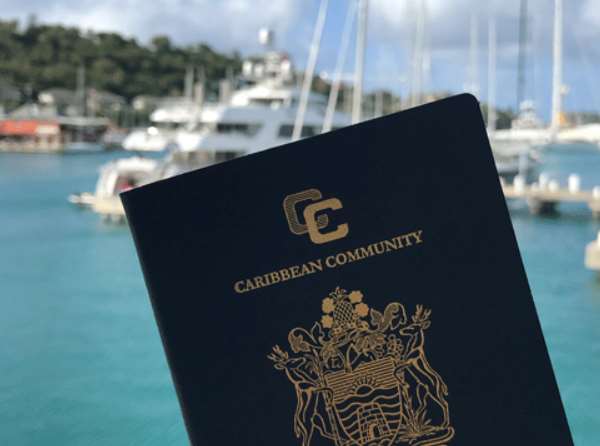
For almost three decades the Caribbean has been the place where second citizenship by investment kept its working definition: a few months, a single fee schedule, no obligation to set foot in the country you now hold a passport from. Five small island states ran their own rulebooks, competed openly on price and processing speed, and built between them the largest pool of investor citizens anywhere in the world. That model is ending.
What is replacing it has a name and a framework. The Eastern Caribbean Citizenship by Investment Regulatory Authority, most people are now writing it as ECCIRA, is a regional body that the five participating governments have agreed to set up over the past eighteen months. The draft agreement carries a date of 1 July 2025. The original plan put implementation in the first half of 2026. A change of government in Saint Lucia after the 1 December 2025 general election shifted the legislative timetable by roughly six months, and the present working assumption across the bloc is that the new rules take effect during the second half of 2026, country by country, as each parliament passes the matching domestic legislation.
We have spent the last several months explaining what this means in practice to clients who were considering Antigua, Dominica, Grenada, Saint Kitts or Saint Lucia. The short version is that the legal route still works, the passport is still the same passport, and the price tags are roughly where they were a year ago. The medium version is that the file an applicant opens in July 2026 will not be the same file an applicant could open in February 2026. The longer version, which is what this piece is for, is that there is a real reason to look at the Caribbean now rather than later, and a few reasons not to panic-buy.
What ECCIRA actually is
ECCIRA is not a new programme. It is a regulator that sits on top of five existing programmes. The Eastern Caribbean states, Antigua and Barbuda, Dominica, Grenada, Saint Kitts and Nevis, and Saint Lucia, have agreed to a treaty-level framework that hands a single regional authority the power to set minimum standards, run cross-border due diligence, audit each country’s processing, and recommend annual application ceilings. The five domestic Citizenship by Investment Units stay in place. They keep issuing the passports. But they now operate inside guard-rails that ECCIRA defines and polices.
This matters because, until ECCIRA, every dispute between the five programmes had to be negotiated in the open. When one country dropped its prices, the others either matched or watched applications drift. When a US State Department report flagged due diligence weaknesses in one programme, the others paid the diplomatic cost through guilt by association. The bilateral negotiations with the European Union over Schengen visa-free access for Caribbean passports made it clear that Brussels treats the five as a single bloc whether or not the bloc has formal coordination. ECCIRA is, among other things, a structural answer to that diplomatic reality.
The administrative shape is straightforward enough. A Council of ministerial representatives from the five states sits at the top. A Board does the operational work. A small Secretariat is being set up in Grenada. CARICOM’s existing Implementation Agency for Crime and Security (IMPACS) is integrated into the due diligence flow, biometric data and application histories will sit in a shared regional database that the five CIUs can query and that IMPACS curates. The point of the architecture is to make it harder for an applicant turned away in Saint Lucia to quietly reappear three months later in Dominica, and easier for the bloc to defend its standards in front of US, UK and EU counterparts.
The five rule changes that matter
Most of the noise around ECCIRA collapses, on closer reading, into five concrete shifts. The order below is the order in which an ordinary applicant will feel them.
1. A 30-day physical residency requirement
This is the headline change and the one most prospective applicants will care about. Today, four of the five Caribbean programmes, Dominica, Grenada, Saint Kitts and Nevis, and Saint Lucia, impose no physical presence requirement at all. The fifth, Antigua and Barbuda, already requires five days of physical presence within the first five years and is the outlier, not the rule.
Under ECCIRA, every approved applicant will be required to spend at least 30 days in their chosen country within the first five years of citizenship, with a minimum threshold in year one (currently drafted at five days). The 30 days do not have to be consecutive. They can be split across multiple visits and pooled across family members in some scenarios. But they have to be verified, either through immigration arrival records, hotel registration data, or the biometric exit-entry stamps that all five countries are now upgrading their borders to capture.
On its face this is a small ask. Thirty days over five years works out to six days a year, and most of the destinations are pleasant places to spend a week. The practical implication is different. For an executive whose calendar is locked twelve months out, for a family balancing schools and elderly parents across continents, for an investor whose tax residency planning depends on staying out of any single jurisdiction past a threshold count of days, even six days a year is a real planning constraint that has to be modelled, not assumed away.
The penalty schedule for non-compliance is also new. The draft agreement allows ECCIRA to impose fines of up to 10% of the qualifying investment amount on non-compliant citizens, and ultimately to recommend passport revocation in flagrant cases. This is a long way from the “issue and forget” model that defined the first decade of Caribbean CBI.
2. Mandatory civic and cultural orientation
Every approved applicant will be required to complete a mandatory orientation programme covering the host country’s history, constitutional principles, legal framework, and a cultural component. The format is being left to each country to design. Some are signalling an online curriculum with verification, others a short in-person seminar to be completed during the residency period.
This is the part of ECCIRA that most directly imports practice from European investor citizenship regimes. Malta’s discontinued investor route required residency, language familiarity and a community-integration commitment. Cyprus’s reformed permanent residence pathway carries language exposure requirements. The Caribbean has, until now, been the regulator-free zone where “naturalisation” meant a fee schedule and a clean police record. That is what is being replaced.
There is a real-world consequence here too. Naturalisation as a concept tied to civic knowledge and time-in-country is much harder for a third country to characterise as a passport-for-sale arrangement. For the Caribbean states defending visa-free access against gradual erosion in Schengen and the United Kingdom, that reframing is not cosmetic. It is the point.
3. Compulsory personal interviews
Every adult applicant, the working draft puts the threshold at age 16 or 18 depending on the country, with discretion to interview dependents above 12 where due diligence concerns arise, will sit for a mandatory interview as part of the application. Format is virtual where the applicant cannot travel and in-person where possible, with standardised question sets that the five CIUs agree in advance.
The interview is not a quiz. It is a structured screening with a behavioural component, designed to surface inconsistencies between an applicant’s written file and their stated motivations, source of wealth, and travel intentions. Experienced licensed agents, which is the only kind we run our applicants through, prepare clients carefully, but the additional friction is real. A file that today takes four to six months will not move faster after the interview requirement lands. Most of our processing-time modelling for the second half of 2026 assumes a four-to-eight-week stretch in timelines purely from the interview-scheduling logistics.
4. Centralised biometric capture and CARICOM IMPACS due diligence
Every applicant will be biometrically enrolled, fingerprints, facial geometry, and in some draft annexes iris capture, at the point of application. The enrolment data goes into a shared regional database curated by CARICOM IMPACS, which is the bloc’s existing crime and security implementation agency. Application histories travel with the applicant. A file declined in one of the five jurisdictions is visible to the other four, and an applicant who tries to start over elsewhere within the bloc is flagged automatically.
This single change is the one most often understated in the public commentary. The old failure mode of Caribbean CBI, that an applicant turned away by one CIU for adverse due diligence could simply approach the next, is the thing ECCIRA is most determined to close. For licensed agents this is welcome. For applicants with even mild past complications in their financial or legal histories, the practical advice has shifted: get the file right the first time, in the right jurisdiction, with the right disclosures, because there will not be a second window.
5. Annual application caps and a five-year passport on a compliance leash
Two other changes complete the picture. ECCIRA’s Board will recommend an annual maximum number of applicants for each participating state, with figures set by reference to absorption capacity, due diligence throughput and macroeconomic indicators. Specific numbers are not yet in the public domain, but the architecture clearly contemplates volume caps that are below recent application levels, which means, in practice, queues.
And the passport itself will issue with an initial five-year validity, renewable to the standard ten years on demonstration of compliance with the residency and orientation conditions. A citizen who has not done the 30 days, or has not completed the orientation, or has fallen into non-compliance with the agreement’s other obligations, faces a renewal that becomes a substantive review rather than a routine extension.
Where each of the five programmes stands today
For applicants weighing the options, the relative positioning of the five programmes still matters, partly because the current rules are still in force, partly because the post-ECCIRA versions of each programme will inherit the pre-existing characters of the underlying countries.
Antigua and Barbuda, From $230,000 for a family of four, processing 3-6 months, visa-free to roughly 150 countries. The five-day in-country requirement is already the law of the land; raising it to 30 days is, for Antigua, a smaller step than for the others. The National Development Fund route remains the cleanest path for families, and the donation per dependent does not scale aggressively. Antigua tends to be our recommendation for cost-conscious families who want one of the strongest Caribbean passports without taking on real estate.
Dominica, From $200,000, processing 4-6 months, visa-free to about 145 countries. The lowest-cost entry point in the bloc, with the longest record of stable processing. Dominica has historically been the programme that competes on absolute price; under ECCIRA the absolute price is less of a free variable because the minimum investment floor is set regionally. Still our default recommendation when budget is the binding constraint.
Grenada, From $235,000, processing 4-6 months, visa-free to roughly 144 countries plus China. Grenada’s standout feature is the US E-2 treaty eligibility that comes with citizenship, the same advantage Türkiye offers, in a smaller and faster package. Our recommendation for entrepreneurs whose endgame is operating a US business under E-2.
Saint Kitts and Nevis, From $250,000, processing 4-6 months, visa-free to about 150 countries. The oldest programme in the bloc (running since 1984), the most established due diligence reputation, and consistently the highest-tier programme in the eyes of European visa-issuing missions. Worth the price premium for applicants for whom passport quality and reputational ceiling matter most.
Saint Lucia, From $240,000, processing 3-4 months, visa-free to about 145 countries. The newest of the five (launched 2016) and historically the fastest. The same Saint Lucia election that delayed ECCIRA ratification is the reason its programme has been in administrative flux during 2026; processing is back to normal as of the second quarter, but our advice has been to confirm timelines on the day rather than rely on quoted figures.
All five qualify the principal applicant’s spouse and dependent children. Most allow dependent parents above a threshold age and unmarried siblings in defined circumstances. The fee structures move in lockstep, when one country shifts, the others tend to follow within a quarter, but the headline prices above are accurate at the time of writing.
Why filing before ratification still matters
The single most important regulatory principle in this space is that new regulations are almost never retroactive. A file that has been formally accepted by a CIU before the new legislation comes into force is processed under the rules in place on the date of acceptance, not the rules that arrive a month later. This is not a Caribbean quirk, it is the standard administrative-law treatment of in-flight applications in every CBI jurisdiction we have worked in.
For ECCIRA, the practical implication is precise. A file lodged and acknowledged by a CIU before that country’s domestic implementing legislation passes is, on present indications, going to be assessed under the existing rules: no 30-day residency, no orientation programme, no biometric capture, no compulsory interview, and a ten-year passport on issue. A file lodged after will not.
This does not mean every applicant should rush. It means every applicant whose decision was already 70% of the way to “yes” should compress the timeline. The difference between filing in July and filing in October is now the difference between a programme that resembles the one we have advised on for years and a programme that has formally changed.
There is a secondary point worth flagging. Application volumes across all five programmes have already started rising as licensed agents bring forward client files in anticipation of the change. CIU staffing is finite; processing slots in the back half of 2026 will be tighter than the published timelines suggest. We are seeing acceptance-to-decision drift by roughly four to six weeks compared with the first half of the year. That is manageable but it is real, and it gets worse as the implementation dates approach.
How we think about route selection in this window
Three frames are useful for an applicant deciding whether to act now or hold off until the post-ECCIRA dust settles.
The “passport quality” frame. If the primary goal is a strong second passport with broad visa-free access and a robust reputation among consulates, the five Caribbean programmes remain a working answer. Saint Kitts and Antigua are the typical first picks here. Filing under current rules is the cleanest outcome for an applicant who wants the smallest possible compliance footprint after issue.
The “treaty optionality” frame. If the goal includes onward access to the United States via the E-2 investor visa, Grenada is the only Caribbean answer, because it holds the relevant treaty with the US, alongside Türkiye, which we cover separately at /citizenship-by-investment/turkiye/. Filing Grenada under current rules avoids the orientation and residency overheads on a passport whose primary use case for many clients is its E-2 utility.
The “cost-discipline” frame. If the binding constraint is total programme cost for a family of four, Dominica and Antigua are the closest competitors at the lower end. Once ECCIRA’s minimum investment floors are formally published, the gap between the five may narrow further. Filing now under current rules locks the present cost structure in.
The frame that does not apply, in our experience, is the “wait and see” one. There is no version of ECCIRA being delayed indefinitely. The political will is there in all five capitals, the diplomatic incentive is overwhelming, and the draft texts are mature. The only real variable is whether ratification slips one quarter or two.
What is not changing
It is also worth being clear about what ECCIRA does not touch.
The five passports themselves, their visa-free access, their UN recognition, their utility for international business and for the children’s onward education planning, are not affected. ECCIRA is a regulatory framework over the process of acquiring citizenship, not a downgrade of the citizenship itself.
The basic financial structures remain the donation-style National Development Fund route in each country, and the real estate route through CIU-approved developments. The fund route is faster, simpler and (after ECCIRA) very likely cheaper than the real estate route on a total-cost basis when fees, holding costs and exit logistics are modelled. The real estate route still suits applicants with a genuine interest in Caribbean property as an asset class. It is not the right route for an applicant whose only goal is the passport.
The dual-citizenship recognition that the five Caribbean states extend, none requires the applicant to renounce their existing nationality, is unchanged and is not on the table.
What we recommend if you are reading this in mid-2026
Talk to a licensed agent before doing anything else. The interaction between the current rules and the imminent regime change is the kind of thing that rewards getting the jurisdiction right the first time rather than the second.
If you have already decided in principle that you want a Caribbean passport and the decision was waiting only on timing, the timing answer is now. The window for filing under existing rules is measured in months, not quarters, and the application volume in front of you is rising in real time.
If you are weighing the Caribbean against Türkiye (the property-route alternative with US E-2 treaty access) or one of the European residency-by-investment programmes at /residency-by-investment/, the calculation has not changed materially. ECCIRA tightens but does not break the Caribbean offer. Türkiye remains the natural alternative for applicants who want US E-2 optionality and prefer keeping capital in a tangible asset rather than a deposit or a donation.
If you are not sure whether you are ready at all, that is the case where waiting carries the least cost. The post-ECCIRA programmes will still be there in 2027. They will be more demanding and slightly more expensive. They will still produce a real passport.
Get this right the first time
We are licensed direct agents in multiple CBI jurisdictions and run the full file end-to-end, route selection, due diligence pre-screening, the apostilled civil documents, the CIU file, the interview preparation that will become standard in the second half of 2026, and the passport collection. We do not take applicants on for jurisdictions where we do not hold the licensing, that is a deliberate choice, because in this space the agent’s standing with the CIU is part of what determines how a file moves.
If you have read this far and you are weighing the Caribbean seriously, the next step is a confidential conversation with a licensed adviser who will look at your specific position, nationality, family composition, source of wealth, tax residency, timeline pressure, and give you a clear read on which of the five programmes fits and how quickly we can get the file moving.
Speak with a Citizenship Network adviser, by phone, email, WhatsApp or Telegram, in whichever of our working languages suits you. The first consultation is private and carries no obligation. We will tell you which programme suits your situation, what the realistic timeline looks like from today’s date, and whether your file can be acknowledged by the CIU before the ECCIRA implementing legislation arrives. The honest answer, for most applicants we have seen this quarter, is that it still can, but the window is narrowing every week.
If you prefer the program detail before the conversation, the five Caribbean options are here: Antigua and Barbuda, Dominica, Grenada, Saint Kitts and Nevis and Saint Lucia. The fuller programme list across both citizenship and residency is at /citizenship-by-investment/ and /residency-by-investment/.
Whatever you decide, decide deliberately. The Caribbean window is real and is closing, but a passport is a thirty-year commitment, not a six-month one, and the right answer is always the one your own circumstances point to, not the one the calendar pressures you into.