
Malta MPRP in 2026: 5 Reasons It Is Back in Focus
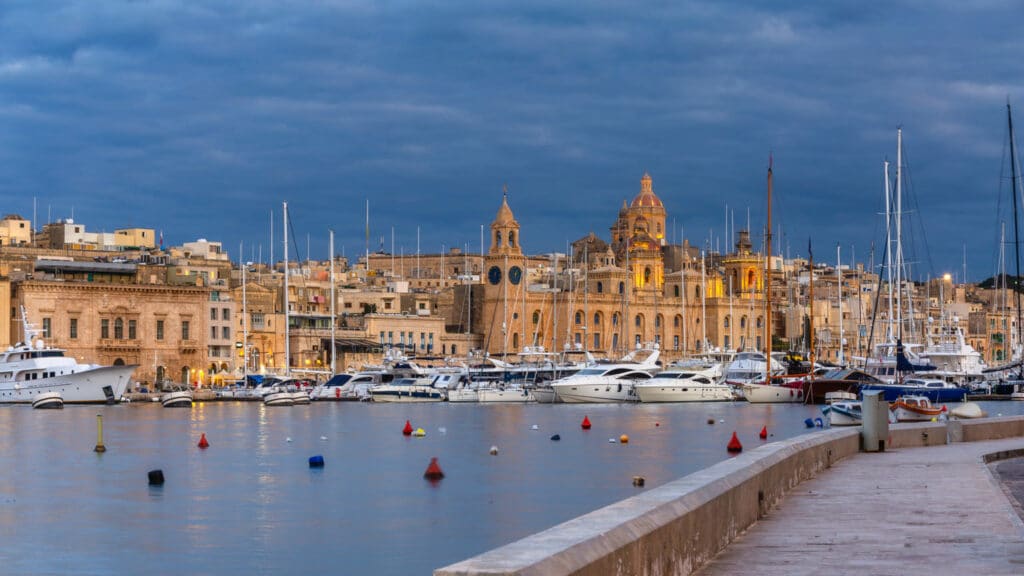
Malta has a way of changing the question.
Some people arrive for a week by the sea. Some come for meetings, school visits or a look at the property market. Then the conversation shifts. Not “where should we travel next”, but “could this become our European base?”
That is why the Malta Permanent Residence Programme is back in front of investors in 2026. The old citizenship-by-investment route is no longer the story. Malta’s residence programme is.
For costs, eligibility and the current application structure, use our Malta Permanent Residence Programme hub as the main reference. This article explains why the programme is being discussed again.
Citizenship Network has seen that change in client conversations. Families are not only asking about a passport. They are asking where their children could study, where parents could spend longer periods comfortably, and where a backup plan still makes sense if Europe remains part of the family’s future.
The MPRP is not new. It has been part of Malta’s residence system for years, with its current legal basis set out in Subsidiary Legislation 217.26 under the Malta Permanent Residence Programme Regulations. The official regulations began on 29 March 2021 through Legal Notice 121 of 2021 and have since been amended, including by Legal Notice 310 of 2024 and Legal Notice 146 of 2025.

1. Malta still offers a real EU residence option
Malta’s investor citizenship route closed after the European Court of Justice ruling of 29 April 2025. We covered that shift in our guide to what replaced Malta’s golden passport.
That matters because it changed the market’s mood. Anyone still looking for a fast Maltese passport is looking at the wrong product. The lawful route now attracting attention is residence, not citizenship.
The MPRP gives qualifying non-EU, non-EEA and non-Swiss nationals permanent residence rights in Malta. It does not promise citizenship. It does not pretend to be a shortcut to nationality. For many families, that clarity is part of the appeal.
Malta is an EU member state, English is widely used, and the island sits close to major European business centres. For investors who want an EU foothold without committing to full relocation from day one, that is a useful combination.
2. The temporary permit makes the waiting period more practical
One of the most useful updates is not glamorous, but it changes the rhythm of the application.
Under regulation 9 of S.L. 217.26, after submitting an MPRP application, an applicant may apply for a temporary residence permit for himself or herself and eligible dependants. The permit is valid for one year and may be renewed in further one-year periods, subject to the Agency’s requirements and documentation rules.
That matters in real life. A family can start thinking about schools, rental areas, medical cover and basic settlement steps while the full residence-by-investment certificate is still moving through the process.
Citizenship Network usually frames this as a planning advantage, not a guarantee of approval. Malta still applies background checks. The temporary permit does not remove due diligence. It simply makes the waiting period less abstract for families who are serious about building a Malta option.
3. The family scope is wider than many investors expect
The MPRP is often discussed as an investor programme, but the family rules are one of its strongest points.
The regulations allow a main applicant to include a spouse or partner with similar status, minor children, dependent unmarried adult children under 29, dependent parents or grandparents of the main applicant or spouse, and adult children certified as having a disability.
That is why Malta keeps coming up in multi-generation planning. A young founder might look at schools and Schengen access. A couple in their forties might be thinking about children and ageing parents at the same time. A retired investor might care less about business travel and more about healthcare, predictability and a place where the wider family can gather.
The programme still requires proof of dependency and each relevant family member goes through checks. It is not a casual add-on list. But compared with many residence routes that narrow the family definition quickly, Malta remains practical for families whose planning does not fit into a two-person box.
4. The property route is flexible enough for different budgets
The MPRP requires a qualifying property, but applicants do not have to buy.
The official regulations set a qualifying rented property threshold of at least €14,000 per year for a residential property in Malta or Gozo. The purchase route requires a qualifying owned property of at least €375,000.
That choice is important. Some clients want to own property because Malta may become a long-term base. Others want the residence option first and prefer to rent while they learn the island. The MPRP leaves room for both profiles.
There is also a five-year property holding rule. Beneficiaries must hold qualifying property for residence for at least five years from the appointed day. After that period, they must still hold residential property in Malta or Gozo, either through ownership, lease or emphyteusis. That is a serious commitment, but it is clearer than many investors expect once the numbers are laid out.
For people comparing Malta with Portugal residency or Greece residency, the key question is not only price. It is the role the country will play in the family’s life.
5. The programme has a stricter, cleaner reputation now
Malta learned the hard way that citizenship and residence must be kept separate. The MPRP now benefits from that distinction.
Residency Malta describes the programme as being built around property, a government contribution, an NGO donation and an administrative fee. It also points to a multi-tier due diligence process. The regulations support that: background verification applies to the main applicant and dependants over 14, with checks covering sanctions, security, serious criminal matters, public interest and related concerns.
That is not a detail to hide. It is one of the reasons serious families still consider Malta. A residence programme used by international families needs guardrails, especially in Europe.
The current fee structure is also clearer. The First Schedule in S.L. 217.26 lists a €60,000 non-refundable administration fee for the main applicant, with €15,000 due after submission and €45,000 due after approval in principle. It also lists a €37,000 contribution whether the qualifying property is owned or rented. A €2,000 donation to an approved local non-governmental organisation is part of the programme structure.
For a family that wants the cheapest possible paper status, Malta may not be the answer. For a family that wants a stable, English-speaking EU base with a formal permanent residence framework, it is back in the discussion for good reason.
What investors should check before moving ahead
There are five practical checks before taking Malta seriously:
- whether the main applicant meets the asset test of €500,000 with €150,000 in financial assets, or €650,000 with €75,000 in financial assets;
- whether all dependants fit the legal definition and can document dependency where needed;
- whether rent or purchase makes more sense for the family’s intended use of Malta;
- whether source-of-funds documents, police conduct records and health insurance can be prepared cleanly;
- whether Malta is the right EU base, or whether another route such as Portugal, Greece or Cyprus fits better.
Citizenship Network can help compare those routes without pretending that one programme is right for everyone. Malta is strongest when the family genuinely values the island, the English-speaking environment, Schengen access and permanent residence status.
Official sources
The key official references are the Residency Malta Agency MPRP page and the Malta Permanent Residence Programme Regulations, S.L. 217.26.
If Malta is back on your shortlist, start with the practical questions: who needs to be included, how the property requirement will be met, and whether the family wants Malta as a working base, a school base, a retirement plan or simply a secure European option. Speak with Citizenship Network and we will map the clean route before you spend money on the wrong file.