
Nauru Extended Its Citizenship Offer. Is This the Right Time to Apply?
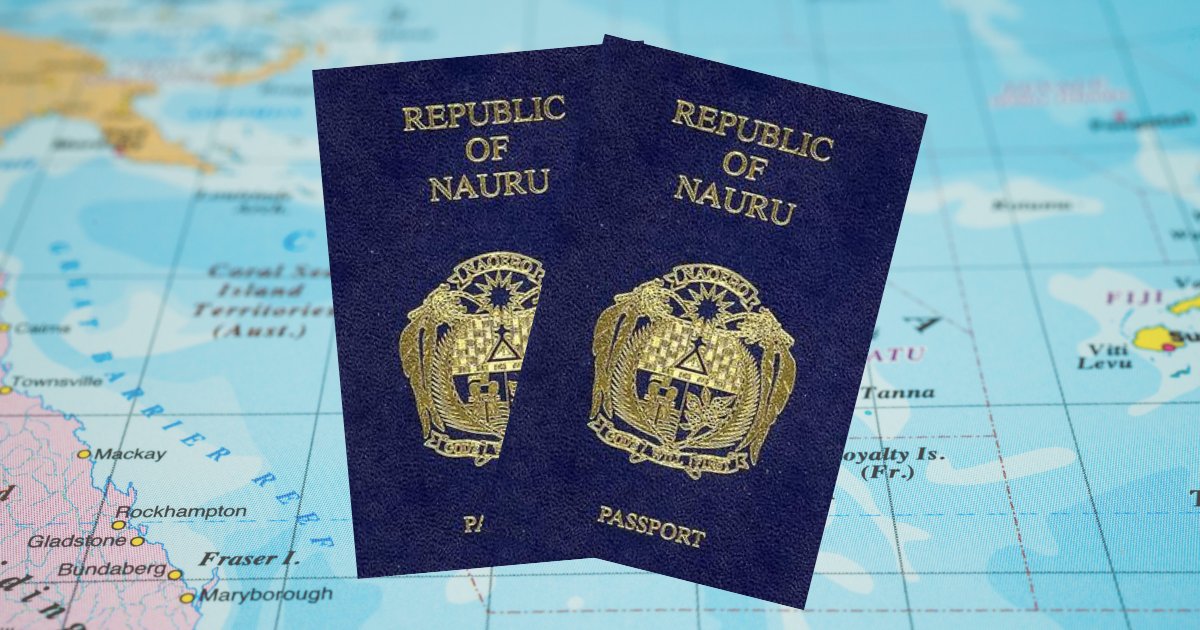
If you are looking at Nauru citizenship, the single most important thing to know is that the $90,000 offer is still on the table.
The Nauru Program Office has extended the Iruwa Initiative to 31 December 2026, giving prospective investors extra runway to access the programme’s reduced contribution amount. Applications submitted before the new deadline remain eligible for the discounted rate.
Nauru now sits among the most affordable citizenship by investment programmes in the world. It offers a fully remote process, a second passport in three to five months, and visa-free or visa-on-arrival access to a useful list of destinations. That said, it is not the right fit for every profile.
In this guide, we walk through what the $90,000 offer includes, what Nauru citizenship actually costs once all fees are added in, what the passport can and cannot do, and whether the programme makes sense for you before the current window closes.
Table of Contents
- What changed with Nauru’s $90,000 citizenship offer?
- How much does Nauru citizenship really cost?
- What can you do with a Nauru passport?
- How fast is the process?
- Is the Nauru programme legitimate?
- Nauru vs Caribbean citizenship programmes
- Who should apply and who should wait?
- Frequently asked questions
What Changed With Nauru’s $90,000 Citizenship Offer
The $90,000 offer did not close in June. It has been extended to 31 December 2026.
That matters, because many websites still refer to the original 30 June deadline, and a lot of what you find online is already out of date.
The discounted contribution sits within the Iruwa Initiative, a special project launched under Nauru’s Economic and Climate Resilience Citizenship Program (ECRCP).
Originally, the reduced contribution amount was available from 29 January to 30 June 2026. The Nauru Program Office then confirmed the extension, allowing eligible applicants to access the lower contribution threshold until the end of the year.
Key Dates
| Milestone | Date |
|---|---|
| Iruwa Initiative launched | 29 January 2026 |
| Original closing date | 30 June 2026 |
| Extension confirmed by circular (signed by CEO Edward Clark) | 15 June 2026 |
| New closing date | 31 December 2026 |
| Discounted contribution | $90,000 |
The extension removes the pressure of an imminent deadline. It does not guarantee a further extension. The real opportunity here is locking in a known contribution amount while it is still available.
How Much Does Nauru Citizenship Really Cost
The advertised $90,000 contribution is not the full picture. A single applicant should budget approximately $102,500 before agent fees.
Many CBI programmes lead with their minimum contribution and leave the rest to the fine print. The actual cost rises once application fees, due diligence, passport fees, and transfer costs come into play.
The good news is that even after all those add-ons, Nauru remains one of the most affordable CBI options currently on the market.
Estimated Cost for a Single Applicant
| Cost item | Amount (USD) |
|---|---|
| Contribution (Iruwa Initiative) | $90,000 |
| Application fee | $5,000 |
| Due diligence fee | $6,000 |
| Passport fee | $500 |
| Bank and transfer costs | ~$1,000 |
| Estimated total | ~$102,500 |
What You Should Know Before Applying
- The main contribution is normally paid after approval in principle.
- Application and due diligence fees are typically non-refundable.
- Additional family members raise the total cost.
- Agent fees vary meaningfully across the market.
For most investors, the takeaway is simple: even after all the mandatory fees are added in, Nauru remains significantly cheaper than most Caribbean programmes.
Example Cost for a Family of Four
Final numbers depend on the age and relationship of dependants. A representative family should expect costs to grow through additional contribution amounts, extra due diligence fees, and extra passport issuance fees.
| Cost component | Estimated amount |
|---|---|
| Main applicant total | ~$102,500 |
| Additional dependant contributions | Varies |
| Due diligence fees (16+) | Additional |
| Passport fees | Additional |
| Estimated family total | Higher than single applicant cost |
The 2026 update to the programme rules reduced the dependant donation amount to $2,000 per dependant over 16 and removed age restrictions for qualifying family members. Before applying, always request a personalised quote based on your specific family structure.
What Can You Do With a Nauru Passport
The Nauru passport offers useful mobility, but it is not a substitute for a strong Caribbean passport or European residency route.
This is where many investors set the wrong comparison. Nauru’s main advantage is affordability and speed. Its main limitation is travel access.
Key Benefits
- Visa-free access to the United Kingdom.
- Visa-free access to Ireland.
- Access to Singapore.
- Access to Hong Kong.
- Access to the UAE.
- Access to South Korea.
- Fully remote citizenship process.
- Dual citizenship allowed.
Important Limitations
- No visa-free access to the Schengen Area.
- No visa-free access to the United States.
- No visa-free access to Canada.
- Newer programme with a shorter track record.
Passport Strength at a Glance
| Category | Nauru passport |
|---|---|
| Visa-free / VOA destinations | ~86-89 |
| UK access | Yes |
| Ireland access | Yes |
| Schengen access | No |
| US access | No |
| Canada access | No |
| Dual citizenship allowed | Yes |
For investors focused primarily on Europe, Nauru is unlikely to be the best fit. For investors after a low-cost second citizenship and broader international flexibility, the value proposition looks stronger.
How Fast Is the Process
Most applicants can obtain Nauru citizenship in about three to five months. That places it among the faster CBI programmes on the market.
The process is fully remote, which removes the need for travel, interviews, language testing, or any residency requirement.
Basic Eligibility Requirements
- Be at least 18 years old.
- Hold a clean criminal record.
- Show a legitimate source of funds.
- Pass due diligence checks.
- Meet health requirements.
Typical Process
| Step | What happens |
|---|---|
| 1 | Initial eligibility assessment |
| 2 | Document preparation |
| 3 | Government submission |
| 4 | Due diligence review |
| 5 | Approval in principle |
| 6 | Contribution payment |
| 7 | Citizenship certificate issued |
| 8 | Passport issued |
The application must be filed through an authorised government agent. One of the practical advantages of Nauru’s model is that applicants receive approval in principle before making the main contribution payment.
Is the Nauru Programme Legitimate
Yes. Nauru’s citizenship programme operates under a formal legal framework and active government oversight.
The question is understandable. Nauru previously ran a controversial passport scheme in the 1990s, and many investors still associate the country with that history.
The current programme is a different structure. It was launched under the Economic and Climate Resilience Citizenship Act 2024 and is administered through a regulated framework with due diligence checks, authorised agents, and formal application procedures.
What Makes the Current Programme Different
| Previous passport scheme | Current citizenship programme |
|---|---|
| Limited oversight | Government-regulated framework |
| Weak due diligence | Multi-layer due diligence checks |
| No modern compliance standards | International compliance procedures |
| Closed years ago | Active programme launched in 2024 |
Applicants must pass background checks before approval. Citizenship is not granted automatically.
Where Does the Money Go
One of the more distinctive elements of the programme is its climate focus. Revenue supports Nauru’s Higher Ground Initiative, a national project designed to build long-term resilience.
Funding is intended to support:
- Climate adaptation projects.
- Infrastructure development.
- Renewable energy initiatives.
- Water security projects.
- The relocation of communities to higher ground.
For some investors, this adds a specific benefit: the contribution supports a national development strategy rather than simply entering a general budget line.
What Are the Risks
No CBI programme is risk-free. Before applying, investors should keep the following in mind:
- Nauru’s programme is relatively new.
- The passport is weaker than Caribbean alternatives.
- Future visa-free agreements can shift.
- Government policy may evolve over time.
None of these factors makes the programme unattractive. They simply mean investors should measure Nauru against their real objectives before committing.
Bottom Line
If your goal is the strongest travel document available through CBI, Caribbean programmes still lead. If your goal is a second citizenship at one of the lowest entry points on the market today, Nauru deserves serious consideration.
Nauru vs Caribbean Citizenship Programmes
Nauru wins on cost. Caribbean programmes win on passport strength and track record. This is the comparison most investors should focus on.
The question is not whether Nauru is objectively better. It is whether Nauru is better for your specific goals.
Side-by-Side Comparison
| Programme | Minimum contribution | Best for |
|---|---|---|
| Nauru | $90,000 | Lowest cost |
| Dominica | From $200,000 | Established option |
| Saint Kitts and Nevis | From $250,000 | Strong passport |
| Grenada | From $235,000 | US E-2 access |
Choose Nauru If You Want
- The lowest possible entry cost.
- A fully remote process.
- Fast processing.
- A second citizenship for optionality and mobility.
- Access to key destinations in Asia, the Gulf, and the UK.
Choose a Caribbean Programme If You Want
- Schengen access.
- A stronger passport.
- A longer-established programme.
- Broader global travel flexibility.
- Extra strategic benefits such as Grenada’s E-2 treaty access.
The Real Decision
Many investors start by looking for the cheapest CBI option. What they actually need is the CBI that solves their specific problem.
If your priority is Europe, Nauru will likely disappoint. If your priority is a second passport quickly and at a relatively low cost, Nauru becomes far more compelling.
Who Should Apply and Who Should Wait
Nauru is a strong fit for some investors and a poor fit for others. The programme makes the most sense when cost and speed matter more than maximum travel freedom.
Nauru Is a Good Fit If You
- Want a second citizenship without a six-figure investment.
- Value flexibility and optionality.
- Travel frequently to Asia or the Gulf.
- Want a fully remote process.
- Prefer a faster timeline.
You May Want to Wait If You
- Need visa-free access to Europe.
- Want access to the United States or Canada.
- Prefer a long-established citizenship programme.
- Are willing to invest more for broader travel benefits.
The extension of the $90,000 offer means investors no longer need to rush the decision. It creates space to compare options properly and pick the programme that aligns with long-term objectives.
Final Verdict
Nauru’s $90,000 offer remains one of the lowest-cost citizenship by investment opportunities on the market today.
For investors seeking a fast, fully remote second citizenship, the programme delivers a compelling combination of affordability and efficiency. Those whose primary goal is visa-free access to Europe, the United States, or Canada may find better value in the more established Caribbean options.
The recent extension to 31 December 2026 gives applicants the time to evaluate the programme properly. That said, there is no guarantee the discounted contribution amount will remain available beyond the current deadline.
Frequently Asked Questions
Is Nauru’s $90,000 citizenship offer really ending on 30 June 2026? No. The Nauru Program Office has extended the Iruwa Initiative to 31 December 2026. Applications submitted before the new deadline remain eligible for the discounted contribution amount, subject to programme requirements.
How much does Nauru citizenship by investment cost in total? A single applicant should expect to pay approximately $102,500 before agent fees. This includes the contribution, application fee, due diligence fee, passport fee, and estimated transfer costs.
Is Nauru citizenship worth it? It depends on your goals. Nauru is one of the most affordable CBI programmes on the market. Investors seeking visa-free access to Europe may find Caribbean alternatives a better fit.
Can a foreigner obtain Nauru citizenship through investment? Yes. Eligible foreign nationals can apply through Nauru’s Economic and Climate Resilience Citizenship Program, provided they meet the government’s due diligence, financial, and eligibility requirements.
How many countries can you visit with a Nauru passport? A Nauru passport provides visa-free or visa-on-arrival access to roughly 86 to 89 destinations, including the United Kingdom, Ireland, Singapore, Hong Kong, the UAE, and South Korea.
Does a Nauru passport provide visa-free access to Europe? No. Nauru passport holders currently do not have visa-free access to the Schengen Area. Travellers still need to obtain the appropriate visa for most European countries.
Does a Nauru passport provide visa-free access to the United States? No. Nauru citizens still require a visa to enter the United States.
How long does the Nauru citizenship process take? Most applications are processed in around three to five months, with the exact timeline depending on due diligence reviews and document preparation.
Can I include my family in a Nauru citizenship application? Yes. Eligible dependants can be included in the same application. Additional fees apply depending on the number, age, and relationship of the dependants being added.
If Nauru is on your CBI shortlist, the starting point is a clean picture of total cost, passport strength, and long-term flexibility measured against your specific goals. Our contact page offers a free initial consultation, usually within 48 hours, that includes a personalised cost estimate based on your family structure.
For the wider Caribbean picture, our citizenship by investment overview covers all five Caribbean programmes side by side. For clients whose long-term aim is European access rather than Pacific or Caribbean access, the descent-based citizenship guide may be a better starting point.
Official sources: