
Polish Citizenship by Descent 2026: The 1920 Act, the Chain-of-Continuity Rule and IPN Archive Claims
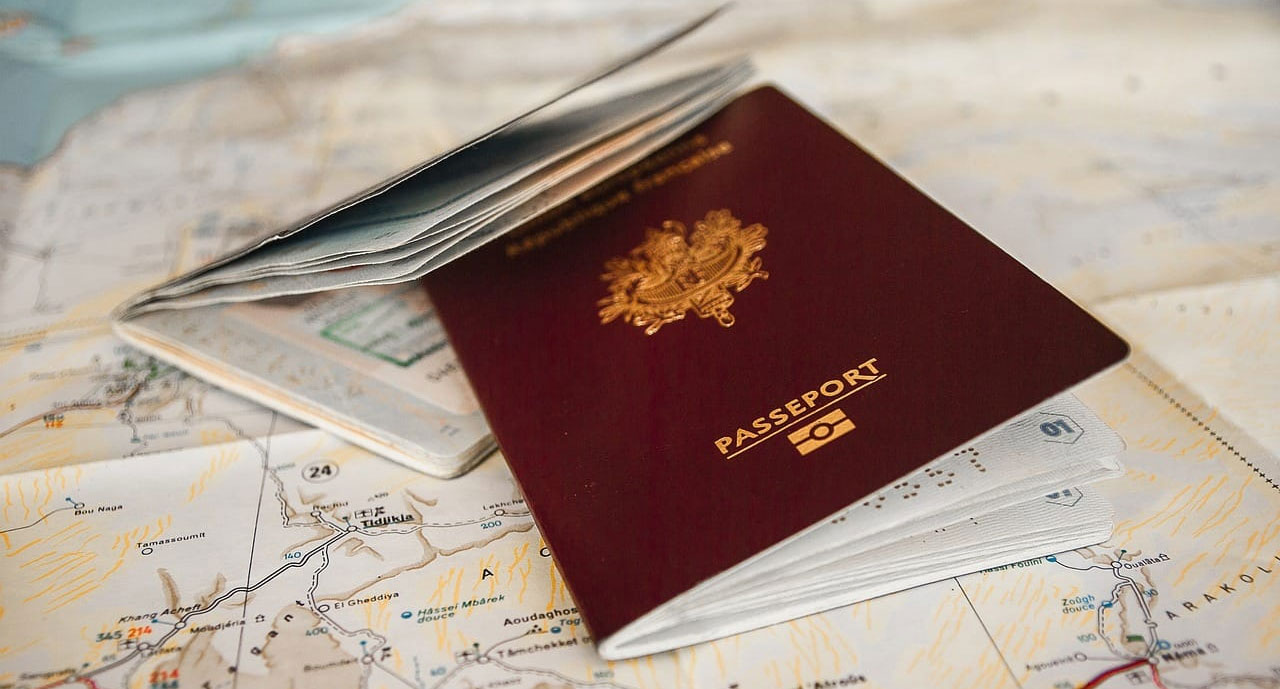
Polish citizenship by descent has one advantage that no other European jus-sanguinis route matches: no generational limit. If your great-great-grandmother was a Polish citizen and every intermediate link in the chain retained Polish citizenship at the moment of the next child’s birth, you are Polish. You are Polish now, you have been since your birth, and Warsaw’s job is to recognise it, not grant it.
That is the theory. In practice, Polish descent claims live and die on one question: was the chain of citizenship ever legally broken? The 1920 Citizenship Act, the 1951 severance rule, the 1962 amendment, the 2009 reform, each layer of Polish citizenship law has its own way of severing a line, and most of the ways are silent. Your grandfather did not need to know he had lost Polish citizenship; the law revoked it automatically on certain acts. Establishing that the chain never broke is the single hardest thing in any Polish descent case.
We wrote this guide for the two populations that generate most of our Polish casework: diaspora families in the US, Canada, UK, Israel and Argentina whose ancestors left before or immediately after WWII, and Ashkenazi Jewish families whose grandparents were Polish citizens between the wars and survived the Holocaust in exile. Both populations can qualify, but the chain-analysis work is entirely different for each.
For the framework of descent citizenship generally, see the complete descent guide. For side-by-side country comparison, the full country list has the register.
The 1920 Citizenship Act and the anchor question
Modern Polish citizenship law starts on 20 January 1920, when the Second Polish Republic enacted its first Citizenship Act. Every Polish descent case has to begin by placing the qualifying ancestor as a Polish citizen at some point after that date. If your ancestor left the territory that became Poland before 20 January 1920 and never returned, they were not a Polish citizen under the modern law, and no descent chain exists to inherit.
The 1920 Act granted Polish citizenship to:
- Persons resident on 1 August 1914 within the territory that became Poland, if they were subjects of the Austrian, Russian or German Empires (with narrow exceptions for state officials and military personnel of the occupying powers).
- Persons born after 1 August 1914 on Polish territory to parents who were Polish citizens.
- Persons subsequently naturalised under the 1920 Act’s procedures.
The territorial reach of “Poland” in 1920 mattered. The Second Republic included parts of what are now Ukraine, Belarus, Lithuania, and small pockets of Russia. If your ancestor’s village was in Vilna (now Vilnius) in 1920, they were a Polish citizen. If in Lviv (Lwów) in 1920, they were a Polish citizen. These claims are still open in 2026 as long as the chain of citizenship was legally maintained.
The severance rules: how a chain breaks
Polish citizenship, once acquired, could be lost automatically by four categories of act. Each one severs the chain for that person and every descendant born after the severance.
1. Voluntary naturalisation abroad before 1951, The 1920 Act (§ 11) provided that a Polish citizen who acquired the citizenship of a foreign state lost Polish citizenship automatically. This ran until 1951 without a Polish state option to retain both citizenships. If your grandfather naturalised as an American in 1935, he lost Polish citizenship at that moment. His children born before 1935 are Polish; his children born after 1935 are not, unless he was still Polish at the moment of their birth.
2. Service in a foreign military, The 1920 Act (§ 11) also severed citizenship for anyone who entered the military service of a foreign state without permission from the Polish authorities. This catches most of the WWII generation: Polish emigrés who served in the US, Canadian, British or French militaries during WWII automatically lost Polish citizenship under this provision unless they had emigrated before their military age or had subsequent restoration acts.
3. Explicit renunciation, Rare, but occurred. If your ancestor filed a formal renunciation of Polish citizenship, the chain broke.
4. The 1962 Act’s post-war severances, The 1962 Citizenship Act (§ 15) introduced new severance categories for post-1962 acts. For descent claims involving grandparents born before 1962, this rarely matters. For claims involving parents born after 1962 and abroad, it can.
The critical 1951 date: on 19 January 1951, the Polish state passed a new Citizenship Act (Ustawa o obywatelstwie polskim z 8 stycznia 1951 r.) which stopped the automatic severance rule for foreign naturalisation. From 20 January 1951 onwards, a Polish citizen who took foreign citizenship did not automatically lose Polish citizenship. This is why the 1951 threshold matters so much: if your ancestor naturalised abroad in 1948 the chain broke; if in 1952 it did not.
The two working pathways in 2026
Pathway A: Confirmation of possession (Potwierdzenie posiadania obywatelstwa polskiego). This is the standard descent recognition. You file with the Wojewoda (Voivode) of Mazowieckie, the governor of the Warsaw province, which handles all foreign-based confirmation applications through the Warsaw central office. The Voivode reviews the chain and issues a decision confirming or denying Polish citizenship. Timeline: 12-24 months. Cost: PLN 200 (~€45) for the government fee, plus documents and legal fees.
Pathway B: Restoration under Article 116-equivalent post-Holocaust routes. Poland does not have a direct equivalent of Germany’s Article 116, but the 2000 amendment to the Citizenship Act, the 2019 amendment to the Karta Polaka (Pole’s Card), and specific Holocaust-restoration statutes provide narrow pathways for descendants of Polish Jews whose citizenship was lost through wartime persecution. These filings are more complex, require IPN archive coordination, and typically take 24-48 months.
For most claimants, non-Jewish diaspora families in the Americas or the UK, Pathway A is the correct route. The chain from a Polish grandparent to you must be documentable and unsevered. For families whose ancestors survived the Holocaust in exile, Pathway A can still be the working route if the grandparent maintained Polish citizenship through the war, many did, but requires IPN archival cooperation.
The document list
The Voivode filing requires, in original or apostilled certified copies:
- Your birth certificate, apostilled and sworn-translated into Polish.
- Your parent’s birth certificate, showing them as either a Polish citizen or a child of a Polish citizen at your birth.
- Your grandparent’s Polish birth certificate (if the descent runs through them). Sources: the Urząd Stanu Cywilnego (civil registry) of the town of birth, the Archiwum Państwowe (State Archive) for pre-1945 records, the Jewish Historical Institute for pre-war Jewish community records, or the IPN for records lost or destroyed in the state archives.
- Marriage certificates for every link in the chain that married.
- Naturalisation histories for the qualifying ancestor and every intermediate generation, showing whether they naturalised abroad and, if so, when. In the US: USCIS Certificate of Non-Existence, plus National Archives Naturalisation Index. In Canada: LAC Certificate of Non-Naturalisation. In the UK: HMPO records or National Archives searches.
- Military service records for males in the chain, particularly for WWII-era ancestors. The purpose is to demonstrate that if they served in a foreign military, they did so after they had already lost Polish citizenship (in which case the service is irrelevant) rather than while Polish (in which case the service severed the chain).
- IPN (Instytut Pamięci Narodowej) records, where available, showing wartime persecution, deportation, or family records lost in the Holocaust. IPN accepts research requests for descent-claim purposes and produces a Zaświadczenie (certificate) that carries weight with the Voivode.
Translations must be by a tłumacz przysięgły, sworn translator registered with the Polish Ministry of Justice. Sworn translations cost roughly PLN 60-100 per page and are done in Poland or at a Polish consulate abroad.
The Voivode process
The Warsaw Voivode’s Mazowiecki Urząd Wojewódzki runs a specialised unit for foreign descent claims. The process:
- Submission, filing is by post to the Warsaw Voivode’s office, or in person if you can travel. Online submission is available in Polish only.
- Preliminary review (2-4 months), the office reviews the file for completeness and issues a request for additional documents if needed. Most files come back at this stage for missing translations, missing apostilles, or missing naturalisation certificates.
- Chain analysis (6-12 months), the office runs the file through the chain-of-continuity test. This is where Polish claims most often fail. If the chain is broken, the office issues a decyzja odmowna (denial) and the file closes.
- Decision, if the chain is intact, the Voivode issues a Decyzja o potwierdzeniu posiadania obywatelstwa polskiego. This is your recognition document.
- Passport application, with the recognition in hand, apply at any Polish consulate abroad or at the Ministerstwo Spraw Wewnętrznych i Administracji in Warsaw. Timeline: 4-8 weeks.
Total wall-clock time from filing to passport: 12-24 months for straightforward cases, 24-48 months for cases requiring IPN archive work.
What the Polish passport buys you
Poland is a full EU member since 2004 and a Schengen member since 2007. The Polish passport ranks in the top 10 of the Henley Passport Index with 183+ visa-free destinations. The core value:
- Full EU rights, live, work, retire, or start a business in any of the 27 EU member states.
- Schengen area, free movement across 29 European states.
- US ESTA, visa-free entry to the United States since 2019.
- Ancestral property claims, access to Polish restitution processes for pre-1939 family property (subject to specific statutes of limitations).
- Business-friendly Poland, 19% flat corporate tax, growing tech and manufacturing sectors, low cost of establishment.
For families weighing Polish descent against another EU route, the cost is comparable to Italian and German descent, the passport strength is similar, and the process is administratively simpler in the sense that the chain-of-continuity test is either yes or no, there is no court route to fall back on if the administrative claim fails.
Cost breakdown
- Document sourcing and archival research: PLN 1,000-8,000 (€230-€1,800), higher for IPN cases.
- Sworn translations: PLN 1,500-3,000 (€350-€700).
- Apostilles and legalisations: PLN 500-1,500 (€120-€350).
- Government fees: PLN 200 (€45) for confirmation, PLN 140 (€32) for passport.
- Legal fees (recommended for complex chains): €2,500-€6,000.
Total: €3,500-€10,000 for a typical case.
Frequently asked questions
1. My great-grandfather was born in Warsaw in 1898. He left for the US in 1912 and naturalised in 1926. My grandfather was born in the US in 1930. Do I qualify? No. Your great-grandfather lost Polish citizenship in 1926 when he naturalised as an American, this predates your grandfather’s birth. The chain was severed at the naturalisation. Your grandfather was never Polish, and neither was your father, and neither are you.
2. Same scenario but naturalisation in 1955? Yes. Naturalisation after 20 January 1951 did not automatically sever Polish citizenship. Your great-grandfather remained Polish. Your grandfather, born 1930 in the US to a Polish citizen father, is Polish by descent. If your grandfather did not himself naturalise pre-1951 or serve in a foreign military pre-1951, the chain runs to your father and to you.
3. My grandmother was Polish. She married an American in 1935 and my father was born in 1938. Am I Polish? Depends on whether her marriage severed her citizenship. Pre-1951 Polish law severed citizenship for women who married foreigners only if the marriage transferred them to the citizenship of the foreign state. Some claims run through this gap. The Voivode will make the determination, if your grandmother acquired US citizenship immediately upon marriage (some jurisdictions did this until 1922, then ended it), her Polish citizenship was severed. If she remained a Polish citizen resident in the US, the chain continued.
4. What if my ancestors were Jewish and my grandparents died in the Holocaust? The descent line runs through whichever grandparent survived (or through the parent who was born before their death). Polish citizenship was not automatically severed by death or by wartime persecution, the persecution victims remained Polish citizens legally until the point of death. Descendants of a Polish grandparent who died in the Holocaust can still qualify if there is an intermediate parent who was born before their grandparent’s death and who inherited Polish citizenship at birth.
5. My grandfather served in the British army in WWII. Does that sever the chain? It depends. If he was already a British subject or Commonwealth national at the time of his service (many Polish emigrés were), the service does not sever Polish citizenship. If he served on Polish citizenship as a Polish soldier attached to the British forces (many did through the Polish Armed Forces in the West), the service does not sever the chain, those units are recognised in Polish law as continuous Polish service. If he emigrated to the UK, naturalised pre-1951, and then joined the British army, the naturalisation itself broke the chain before the service.
6. Do I need to speak Polish? No. Polish descent recognition (Pathway A) has no language requirement. The general residency-based naturalisation route requires Polish at B1, but confirmation of possession is exempt.
7. Can I visit Poland while my file is under review? Yes. You can visit Poland during the process. Once your recognition is issued, your passport application confirms your Polish citizenship formally, until then you visit on your existing passport under the visa-free rules for your current nationality.
8. Does Poland allow dual citizenship? Yes, since the 2009 Citizenship Act. Poland officially recognises dual citizenship for Polish citizens who acquire another citizenship, and for foreign citizens who acquire Polish citizenship through descent or naturalisation. There is no renunciation requirement.
9. How does Polish descent compare to Italian or Irish descent? Polish descent is deeper (unlimited generations) but stricter on chain continuity. Italian descent was similarly unlimited before March 2025 and remains grandfathered for older filings. Irish descent is capped at grandparent but has a much simpler eligibility test. For families with a Polish grandparent whose chain is documentable, Polish descent is comparable to Italian for cost and processing time, faster than Irish in some cases, and produces an EU passport of similar strength.
10. What if my file is rejected, can I appeal? Yes. Voivode decisions can be appealed to the Minister of Interior and Administration within 14 days of receipt of the decision. Appeals are administrative rather than judicial and take another 6-12 months. If the administrative appeal fails, a judicial appeal to the Wojewódzki Sąd Administracyjny (Voivodeship Administrative Court) is available and has an additional 6-18 month timeline. Success on appeal typically requires new evidence, often IPN archive documents that were not available at the time of the original filing.
11. Can I file for my children at the same time? Yes. If you have children under 16, you can file for them alongside your own case. If they are 16 or over, they must file for themselves but can file simultaneously with you using the same set of ancestor documents.
12. Is the IPN research worth the extra time? For chain-analysis cases where the paper trail runs through pre-WWII eastern Polish territories (now Ukraine, Belarus, Lithuania), yes. IPN has custody of records that the standard Archiwum Państwowe system does not, and its Zaświadczenia carry substantial weight with the Voivode. For cases where all documents come from Warsaw or Kraków civil registries, the IPN step is unnecessary.
If your family has a Polish grandparent or great-grandparent, the first working step is a chain-continuity check: was there a foreign naturalisation, a foreign military service, or an explicit renunciation before 1951? If yes, the claim is difficult; if no, the claim is administratively viable. Our contact page has a preliminary check, 48 hours, no cost, that maps the chain and flags severance risks before you commit to sworn translations and legal fees.
For the broader framework, the complete descent guide covers general process. For side-by-side country comparison, see Italian, Irish, German, and Spanish descent guides, each of which may be the working alternative if the Polish chain has been severed.