
São Tomé and Príncipe CBI First Year: What the 548 Applications Really Show
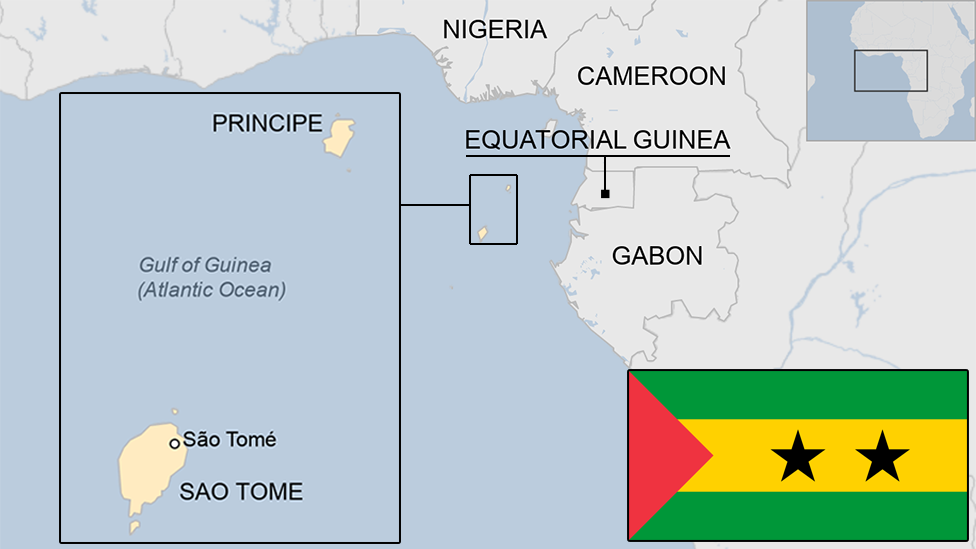
São Tomé and Príncipe has moved from a new citizenship by investment name to a program with a first-year record.
The Citizenship by Investment Unit’s first-year report, dated 1 September 2026, gives the market something more useful than launch talk: numbers. The program received 548 applications from 72 nationalities in its first year. Of those, 350 applications were approved, 186 remained in process, and 12 were rejected during the reporting period.
That is a serious start for a small African island state that entered the investment migration market only recently.
It also gives investors a clearer way to judge the program. São Tomé and Príncipe is not competing with the Caribbean on passport strength. It is competing on cost, speed, simplicity and the idea that a low-entry citizenship program can still be tied to visible national development.
Citizenship Network has been watching this file closely because it sits in a different place from the older citizenship by investment programs. For the right applicant, that can be useful. For the wrong applicant, the low headline price can distract from the real questions.
The first-year numbers
The headline figure is easy to remember: 548 applications in year one.
The more interesting detail is what happened after submission. The Unit reported:
- 350 approved applications
- 186 applications still in process
- 12 rejected applications
- 117 citizenships granted
- 29 passports issued
- fastest approval in 26 days
- average time to approval of about 2 months
- average time to passport of about 4 months
These numbers tell two stories at once.
The first is demand. A new program with USD 90,000 entry pricing has clearly found an audience. The second is capacity. Approvals moved faster than final citizenship document and passport issuance. The Unit itself acknowledged that post-approval issuance had not kept the same pace and said it was working with national authorities to improve coordination and office capacity in São Tomé and Príncipe.
That is not unusual for a young program. It is still something investors should understand before filing. Approval and passport delivery are related steps, but they are not the same date.
Why the USD 90,000 price matters
São Tomé and Príncipe became notable because of its price point.
The National Transformation Fund route starts at USD 90,000 for a single applicant. That puts the program among the lowest-cost active citizenship by investment options available in 2026. For families, the pricing can still be competitive, depending on the number and type of dependents.
Low cost should not be confused with low diligence.
The first-year report shows 12 rejected applications, which matters. A program that approves everyone is not a healthy program. Serious investors should prefer a route that says no to weak files, because the long-term value of a passport depends partly on whether the issuing country can defend its standards.
Citizenship Network looks at São Tomé and Príncipe as a price-efficient citizenship route, not as a shortcut around documentation. Applicants still need clean identity records, police clearances, source of funds evidence and a file that can survive government review.
Who applied in the first year?
The program’s first-year intake was broad.
According to the Unit’s figures, applications came from 72 nationalities across Asia, Africa, the Middle East, Europe and the Americas. The top groups by application count were China, Russia, Iran, Germany and stateless applicants, with all other nationalities together forming the largest combined group.
That matters for two reasons.
First, it shows the program is not dependent on one market. Second, it shows why processing discipline will matter more as volume grows. A file from one country may be simple. A file involving several residences, name changes, corporate income, crypto history or stateless documentation can take longer.
Investors should avoid reading the fastest approval time as a promise. A 26-day approval is possible only for a very clean file. A more realistic planning conversation should cover document collection, translation, legalization, review time, contribution payment, citizenship issuance and passport delivery.
Families are using the program, not only single applicants
The first-year report also gives useful family data.
Single applicants represented 43% of applications. Families of 2 to 4 represented 47%. Larger families of 5 to 8 made up the remaining 10%.
That mix is important. It means São Tomé and Príncipe is not being used only as a quick individual passport. Families are testing it as a lower-cost second citizenship route where spouse, children and eligible older dependents may be part of the same planning conversation.
For families comparing São Tomé and Príncipe with Nauru citizenship, Dominica citizenship or Grenada citizenship, the question is rarely just price. It is usually a trade-off between cost, timing, visa-free access, document burden, family structure and long-term credibility.
That is where the file needs a proper comparison before money moves.
The development story is central
The program’s contributions go to the National Transformation Fund. According to the first-year report, about half of approved applicants had completed qualifying contribution payments during the reporting period, generating more than USD 9.8 million for the fund.
The report connects those funds to practical public needs: energy capacity, IT infrastructure, water supply, wastewater systems, waste management and digital public services.
That development angle also appears in official government investment material. The Government-backed RISE STP investment platform highlights infrastructure, water, transport, tourism, digital systems and sustainable development priorities. Other official São Tomé and Príncipe government portals point in the same direction, including digital public administration and tourism heritage projects.
For investors, the point is not only where the money goes. The point is whether the country can show a clear public purpose for the program. A citizenship route tied to visible national projects is easier to explain than one framed only as a passport sale.
The strengths and limits
São Tomé and Príncipe has clear strengths:
- low entry contribution
- no relocation requirement
- remote-friendly process
- family suitability
- young program with visible first-year demand
- contribution route linked to a national fund
It also has limits:
- passport access is not as broad as the leading Caribbean programs
- document issuance can lag behind approval
- young programs can change procedures as volume grows
- investors need careful source of funds preparation
- public familiarity with the passport is still developing
None of these points make the program weak. They simply define what the program is.
São Tomé and Príncipe is best understood as a cost-sensitive second citizenship route for applicants who value legal status, family planning and timing more than maximum visa-free travel. It may also suit investors building a wider mobility plan where one passport solves speed and cost, while another route later solves Europe, the United States, business presence or residence planning.
How Citizenship Network reviews a São Tomé file
Citizenship Network starts with the applicant, not the headline price.
For São Tomé and Príncipe, the first review should answer:
- Is the main applicant’s source of funds easy to prove?
- Which dependents need to be included?
- Are names, dates and civil records consistent?
- Are police certificates likely to be straightforward?
- Is the applicant choosing this passport for cost, timing or travel access?
- Would another program serve the family better?
If the goal is the lowest realistic entry point into citizenship by investment, São Tomé and Príncipe deserves attention. If the goal is the strongest travel document, the answer may be elsewhere. If the goal is family security at controlled cost, it may be a serious candidate.
For a full country breakdown, start with our São Tomé and Príncipe citizenship by investment guide. You can also compare it with the wider citizenship by investment section or speak with our team through the Citizenship Network contact page.
Bottom line
The first year of São Tomé and Príncipe’s citizenship by investment program was not quiet.
With 548 applications, 72 nationalities, 350 approvals and more than USD 9.8 million reported for the National Transformation Fund, the program has moved beyond launch-stage curiosity. It now has early operating data.
The next test is execution. Investors will watch whether approvals, citizenship certificates and passports stay aligned as volume rises. They will also watch whether funded projects remain visible and whether the government keeps the program credible as it grows.
For now, the program has earned a place on the shortlist for price-sensitive investors who want a legal second citizenship route and understand the trade-offs.
Citizenship Network can review eligibility, family structure, source of funds and timing before you commit to the wrong route.