
Irish Citizenship 2026: All Working Routes, Descent, Marriage, Naturalisation and the Closed IIP
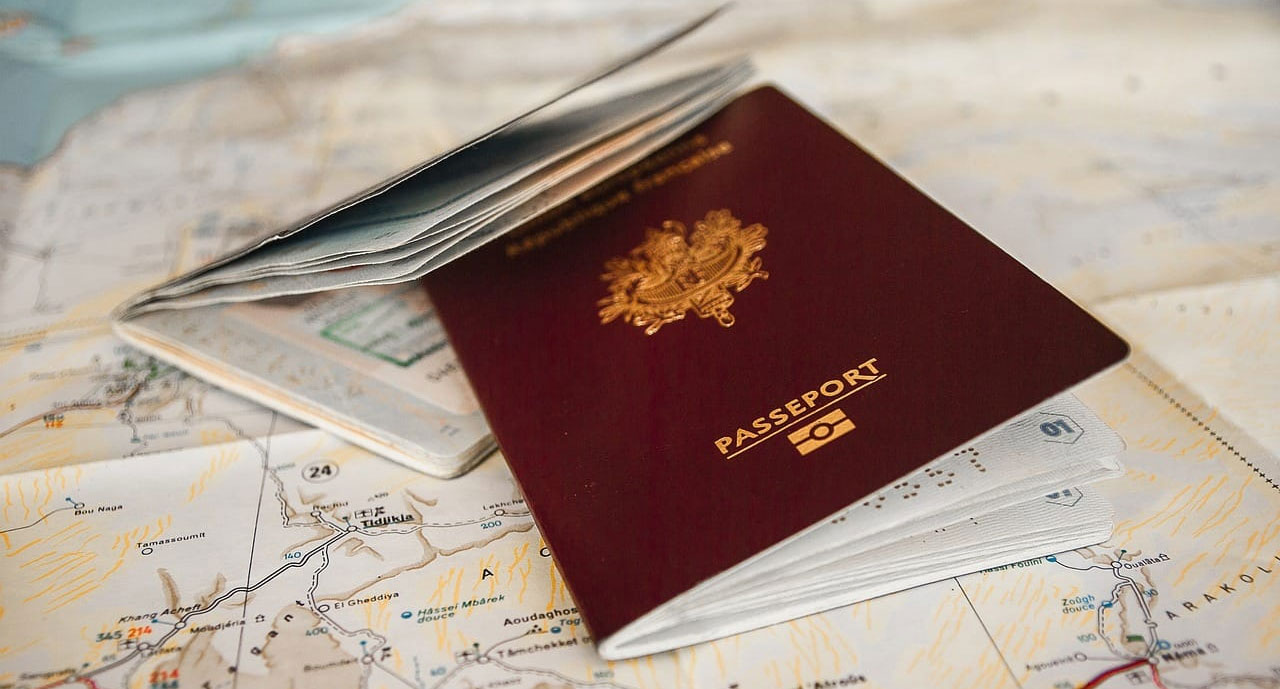
Irish citizenship in 2026 is legally available through three routes. Descent through the Foreign Births Register (FBR) if you have a qualifying Irish-born grandparent. Marriage to an Irish citizen after three years of residency. Ordinary naturalisation after five years of legal residence. The Immigrant Investor Programme (IIP), which for a decade was Ireland’s investor-migration route, closed to new applications on 15 February 2023 and has not been replaced. Ireland is now the only major English-speaking EU state without an active investor immigration programme, and this changes the calculus significantly for HNWI who previously considered Dublin as a base.
This guide covers the three remaining routes with 2026 eligibility rules, current timelines, and the specific trade-offs between them. For the descent mechanics, see the Irish descent guide.
Route 1: Citizenship by descent (Foreign Births Register)
The primary route for anyone with a qualifying Irish-born grandparent. Six to twelve months in 2026, €600-€3,500 total cost, no residency, no language test.
Eligibility:
- One grandparent born on the island of Ireland (Republic or Northern Ireland), OR
- One parent registered on the FBR before your birth (great-grandparent claim).
Not eligible: great-grandparent claims where the parent was not registered on the FBR at the time of the applicant’s birth. This trap catches roughly a third of the claims we see.
Working reality: this is the fastest and cheapest EU citizenship route available in 2026 for anyone with the qualifying ancestor. It is also the only route on this page that grants Irish citizenship without requiring residency in Ireland.
Full mechanics: Irish descent guide.
Route 2: Citizenship by marriage
Naturalisation as the spouse of an Irish citizen, under Section 15A of the Irish Nationality and Citizenship Act 1956.
Eligibility:
- Married to (or in a civil partnership with) an Irish citizen for at least three years.
- Legal residence in the State (Republic of Ireland) for at least three of the previous five years.
- One full year of continuous residence immediately before the application.
- Intention to reside in Ireland going forward.
- Good character (no serious criminal record).
- Fee: €175 for the application, €950 for the certificate of naturalisation.
Note that unlike some other EU marriage routes, Irish naturalisation through marriage still requires legal residence in Ireland, you cannot naturalise from abroad. The three years of marriage plus three of the previous five years in Ireland effectively means you need to have been living in Ireland with your Irish spouse.
Processing time: 18-30 months in 2026. The Immigration Service Delivery has cleared most of the pandemic-era backlog.
Documents:
- Marriage/civil partnership certificate.
- Proof of Irish spouse’s citizenship.
- Proof of five-year residence in Ireland (utility bills, tax returns, bank statements, employment records).
- Applicant’s birth certificate, apostilled and translated if not in English.
- Character certificates from every country of residence in the previous three years.
- Two passport-style photographs.
Cost: total €1,500-€4,000 including translations, apostilles and legal fees.
Route 3: Ordinary naturalisation by residency
Standard naturalisation for anyone who legally resides in Ireland for the requisite period.
Eligibility:
- 5 years of “reckonable residence” in Ireland out of the previous 9 years, including 1 continuous year immediately before the application.
- Reckonable residence means residence with a valid immigration permission, Stamp 1, 3, 4, or 5. Stamp 2 (student) does not count.
- Good character.
- Intention to reside in Ireland going forward.
- No serious criminal record.
Working residency routes to accumulate the five years:
- Employment permit (Stamp 1 → Stamp 4 after 5 years).
- Critical Skills Employment Permit, accelerated 2-year track to Stamp 4 for high-skill occupations on the critical skills list.
- Family reunification with an EU or Irish citizen spouse (Stamp 4 immediately).
- Retirement, high-net-worth retirement pathway available for those with €50,000+ passive income and €500,000+ assets. Grants Stamp 0 which is reckonable.
- EU Treaty Rights, spouse or family member of an EU/EEA/Swiss national exercising Treaty Rights in Ireland.
- Student → Stamp 4, students can obtain Stamp 4 after successful post-graduation employment, then start the 5-year clock.
There is no golden visa or investor visa route in Ireland after the IIP closure. The retirement pathway (Stamp 0) is the closest equivalent for wealthy non-workers, but Stamp 0 has an important limitation: it must be renewed annually, does not permit employment, and does not automatically convert to residence entitlements over time in the same way as Stamp 4.
Processing time: 24-36 months from filing after 5 years is complete.
Cost: total €1,000-€3,000 including certification fees.
The Immigrant Investor Programme (IIP): closed February 2023
The IIP ran from 2012 to February 2023 and offered four investment options: €1M investment in an Irish enterprise, €500K philanthropic donation, €1M bond investment, or €2M investment in a listed investment fund. Approved IIP applicants received Stamp 4 for 5 years, renewable, with a path to naturalisation.
The programme closed to new applications on 15 February 2023. Ministerial statements indicated that the closure was permanent, Ireland’s position was that the investor migration model had “run its course” for EU member states and that the closure aligned Ireland with the European Commission’s recommendations following the Malta/Cyprus reviews.
Existing IIP holders: pre-February-2023 approved IIP holders retain their Stamp 4 and their pathway to naturalisation on the ordinary residency clock. The programme is closed to new entrants only.
No replacement announced: as of mid-2026, no successor programme has been announced. Ireland does not have a golden visa. The retirement pathway (Stamp 0) is not marketed as an investor route and its terms are noticeably less generous than typical golden visa programmes.
Practical consequence: HNWI who previously would have used the IIP now need to structure Irish residency through employment (Critical Skills Employment Permit) or through the Stamp 0 retirement route. Both are workable but slower than the historical IIP.
Comparison table
| Route | Eligibility | Timeline | Cost | Residency required | Language |
|---|---|---|---|---|---|
| Descent (FBR grandparent) | Grandparent born in Ireland | 6-12 months | €600-€3,500 | No | No |
| Descent (FBR great-grandparent) | Parent FBR-registered before your birth | 6-12 months | €600-€3,500 | No | No |
| Marriage | 3 years marriage + 3 years residency | 18-30 months | €1,500-€4,000 | Yes | No formal test |
| Naturalisation | 5 years reckonable residence | 24-36 months | €1,000-€3,000 | Yes (5 years) | No formal test |
| IIP investor | CLOSED February 2023 | N/A | N/A | N/A | N/A |
What the Irish passport buys you
Ireland’s passport ranks in the top three of the Henley Passport Index with 191 visa-free destinations.
- Full EU rights, live, work, retire, study across all 27 EU member states.
- Schengen area, free movement across 29 European states (Ireland itself is not in Schengen but its citizens enjoy Schengen visa-free access).
- Common Travel Area with the UK, full rights to live, work, and vote in the United Kingdom, including NHS access. This is a bilateral right independent of EU status and continues post-Brexit.
- US ESTA, visa-free entry to the United States.
- Passing citizenship to children, Irish citizens by descent or naturalisation can register children on the FBR at birth, extending the descent line to future generations.
- Common law jurisdiction, Irish courts follow common law with strong protection for property rights and business ownership.
For families with a qualifying Irish grandparent, the descent route through the FBR remains one of the strongest working EU citizenship routes on cost, speed, and passport strength.
Which route fits your circumstances?
If you have a grandparent born on the island of Ireland: descent (FBR) is the correct route. Fastest, cheapest, no residency, no language. See Irish descent guide.
If you are married to an Irish citizen and plan to live in Ireland: marriage route after 3 years of marriage plus 3 years of Irish residency.
If you have Irish employment or family ties that support 5 years of residency: ordinary naturalisation after 5 years.
If you are a HNWI who previously considered the IIP: no direct replacement. Working alternatives include (a) Stamp 0 retirement route if you have the passive income to qualify, (b) Critical Skills Employment Permit if you have qualifying professional expertise, (c) EU-based golden visas such as Portugal, which grant EU residency and thus visa-free access to Ireland after naturalisation, or (d) Malta MEIN citizenship, which grants direct EU citizenship.
If none of the above fit and you want a strong passport quickly: consider Caribbean CBI programmes or Turkey CBI, both of which produce strong passports on a shorter timeline than any Irish residency route.
Frequently asked questions
1. Can I still apply to the IIP? No. The IIP closed to new applications on 15 February 2023 and has not been replaced. Pre-closure approvals continue but no new applications are accepted.
2. Is there an Irish golden visa? No. Ireland has no direct golden visa route as of 2026. The closest equivalents are the Critical Skills Employment Permit (for professionals) and Stamp 0 (for retirees with sufficient passive income).
3. How does Irish descent compare to Italian or German descent? Ireland is the fastest and cheapest of the three: 6-12 months, €600-€3,500, no chain-continuity analysis, no language test. Italy and Germany have deeper generational reach but slower and more complex processes. For families with a qualifying Irish grandparent, Ireland is the default recommendation.
4. Does Ireland allow dual citizenship? Yes. Ireland fully accepts dual citizenship for all descent and naturalisation routes. There is no renunciation requirement.
5. Do I need to speak Irish (Gaeilge)? No. None of the three working routes has a language requirement. English proficiency is expected but no formal test is administered.
6. Do I have to visit Ireland to file for descent? No. FBR filings can be made from abroad through the Department of Foreign Affairs, either through your local Irish embassy/consulate or directly to Dublin.
7. Can I file for descent if my parent is deceased? Yes, if your parent’s own Irish descent chain is documentable through their birth certificate and the qualifying grandparent’s Irish birth certificate. Death of your parent does not sever the line.
8. What if my only Irish ancestor is a great-grandparent? You qualify for FBR registration only if your parent (or grandparent) was registered on the FBR before your birth. If not, the great-grandparent route is administratively closed to you. The workaround: your parent registers on the FBR now, becomes Irish now, and can then register their minor children (if you are still under 18) as Irish through you. For adult great-grandchildren whose parent was not FBR-registered, the route is closed.
9. Can my children claim Irish citizenship through me if I acquire Irish citizenship? Yes. Children born after your Irish citizenship acquisition are Irish citizens by descent. Children born before your acquisition can register on the FBR through you while they are minors.
10. What is Stamp 0 and does it lead to citizenship? Stamp 0 is a low-condition residence permission for high-net-worth non-workers, typically retirees with €50,000+ passive income and €500,000+ assets. It permits residence but not employment. It is reckonable for the 5-year naturalisation clock, so a Stamp 0 holder can naturalise after 5 years of continuous Stamp 0 residence. It must be renewed annually.
11. Do I have to give up my current citizenship? No. Ireland accepts dual citizenship. US, UK, Canadian, Australian, and most EU citizens can hold Irish citizenship alongside their original citizenship.
12. How does the Irish passport compare to Portuguese, Italian, or Maltese passports for EU rights? All four grant identical EU rights in law. In practice, Irish passports are among the most-accepted at global border controls, ranking with German, Swiss and Singaporean passports. The unique Irish advantage is the Common Travel Area with the UK, which grants Irish citizens post-Brexit rights in the UK that no other EU passport carries.
For families with a qualifying Irish grandparent, the FBR descent route is the working recommendation, fastest and cheapest of the three routes on this page. For HNWI who previously considered the IIP, no direct Irish replacement exists in 2026 and alternative EU or Caribbean routes are the practical fallback.
Our contact page has a preliminary eligibility check that assesses your family history against all three Irish routes plus the working alternatives, 48 hours, no cost. For the descent mechanics, see the Irish descent guide. For the framework of descent citizenship, the complete descent guide. For side-by-side country comparison, see Italian, German, Polish, and Spanish guides.